48 Hours in Prague: Clocks, Canals, and a Nutria Family
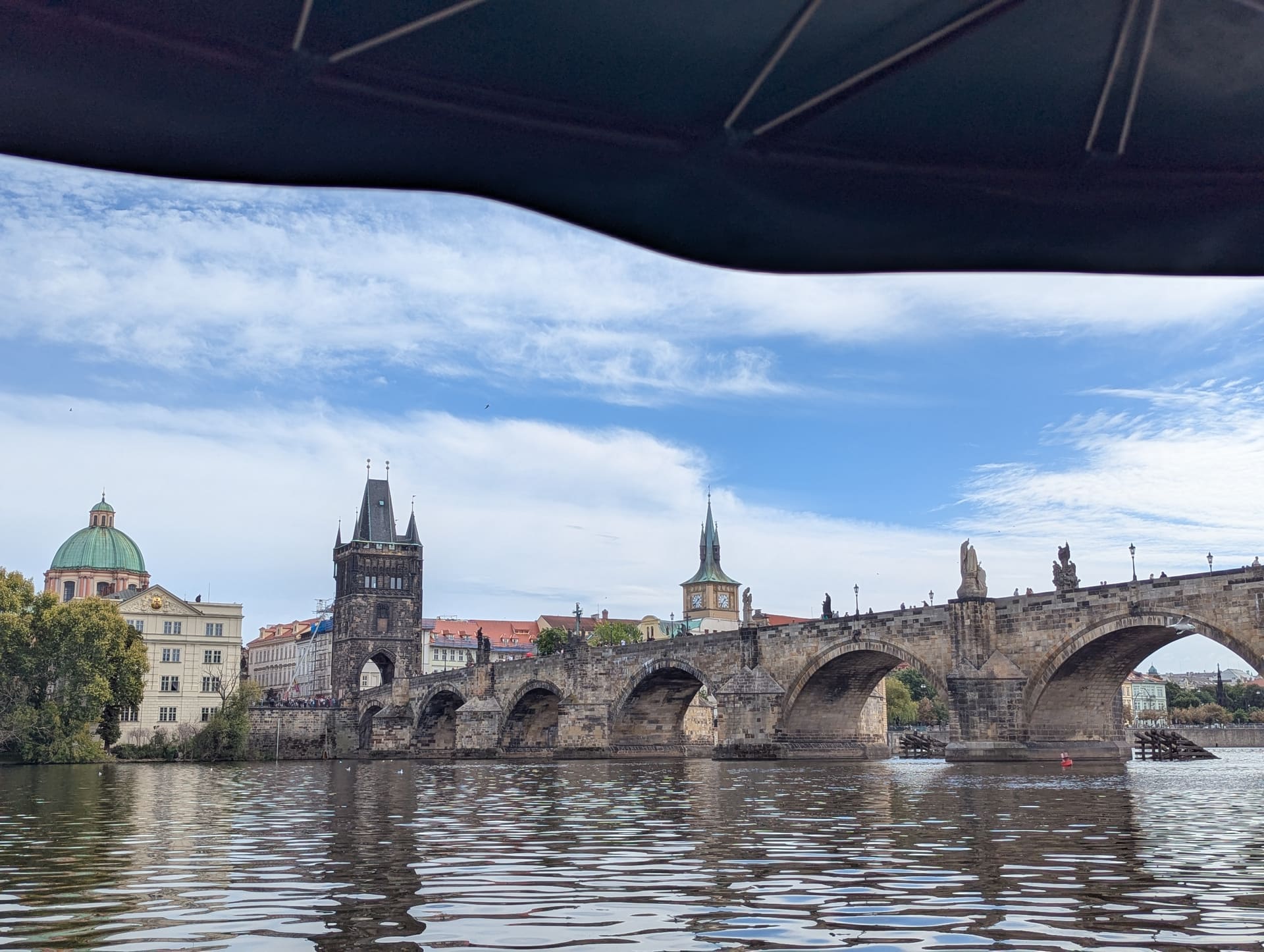
Two days, one city, and a badminton racket still in the trunk. Right after wrapping up an inter-railway tournament — fourth place in doubles, eighth in singles, a real improvement but not podium yet — we pointed the car east and drove from Nürnberg across the Czech border. Two hours later, we were in Prague.
Getting there
The drive cuts straight through Plzeň (Pilsen), and it's worth the stop. We only planned a quick pit stop at the giant shopping center there — it turned into two hours of browsing, including a genuinely great music shop tucked into the corner. My guitar's been broken for a while, and Germany, where I live, is oddly short on proper guitar shops.
Fact: Plzeň is the birthplace of Pilsner beer — Pilsner Urquell was first brewed there in 1842, and every golden lager in the world traces back to that recipe.
Everyone we met in and around Prague went out of their way to help, even with the language gap. Good first impression before we'd even reached the hotel.
Driving into Prague itself, on the other hand, was less relaxing — flyovers twisting in every direction and a pedestrian crossing at every corner. Worth knowing before you go: once you're parked, ditch the car. More on that in the tips below.
Day one: Old Town, the Orloj, and Charles Bridge
Our hotel connected directly to Metro Line C, and once we stopped driving, everything got easy. Prague's public transport is genuinely excellent.
Fact: Three metro lines (A, B, C) crisscross the city with cross-platform transfers, and trams run every few minutes — often several going the same direction at once, so you're rarely waiting long.
Metro, then a tram, and we were at the city center. First stop: a building with an old fighter jet reimagined as a giant butterfly mounted on its façade — the Fly Vista building.
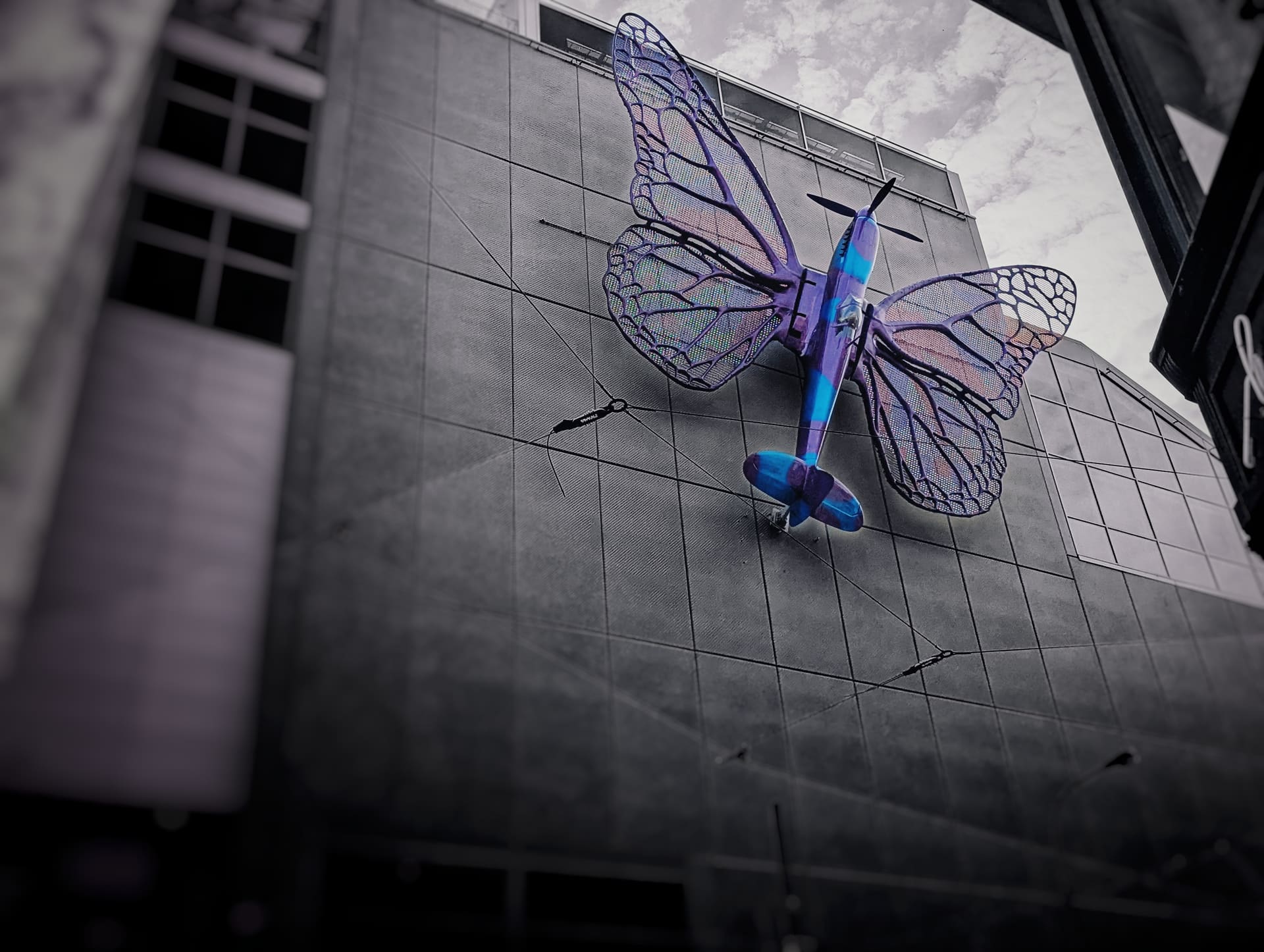
A fighter jet, reborn as a butterfly, bolted to the side of a building.
A short walk away: the Orloj, Prague's medieval astronomical clock, still ticking in Old Town Square.
Fact: Installed in 1410, the Orloj is the oldest astronomical clock in the world still operating.
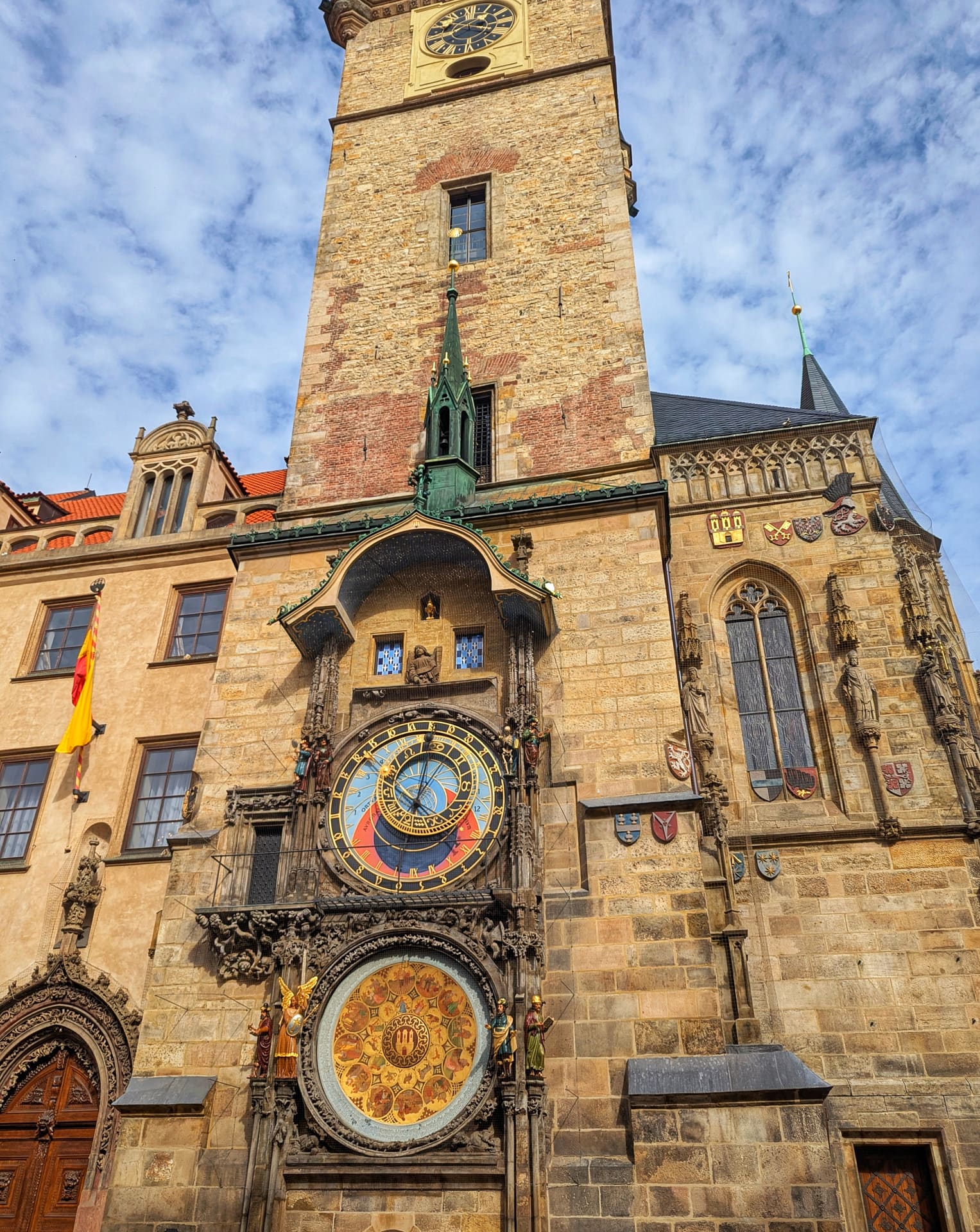
The Orloj — over 600 years old and still keeping time.
Prague isn't a big city, and a lot of it is walkable — though "walkable" doesn't always mean "close." We could've hopped a tram between stops but chose to walk, and from the clock we went straight to Charles Bridge.
Fact: Construction started in 1357 under Charles IV — the bridge has been carrying foot traffic across the Vltava for well over 650 years.
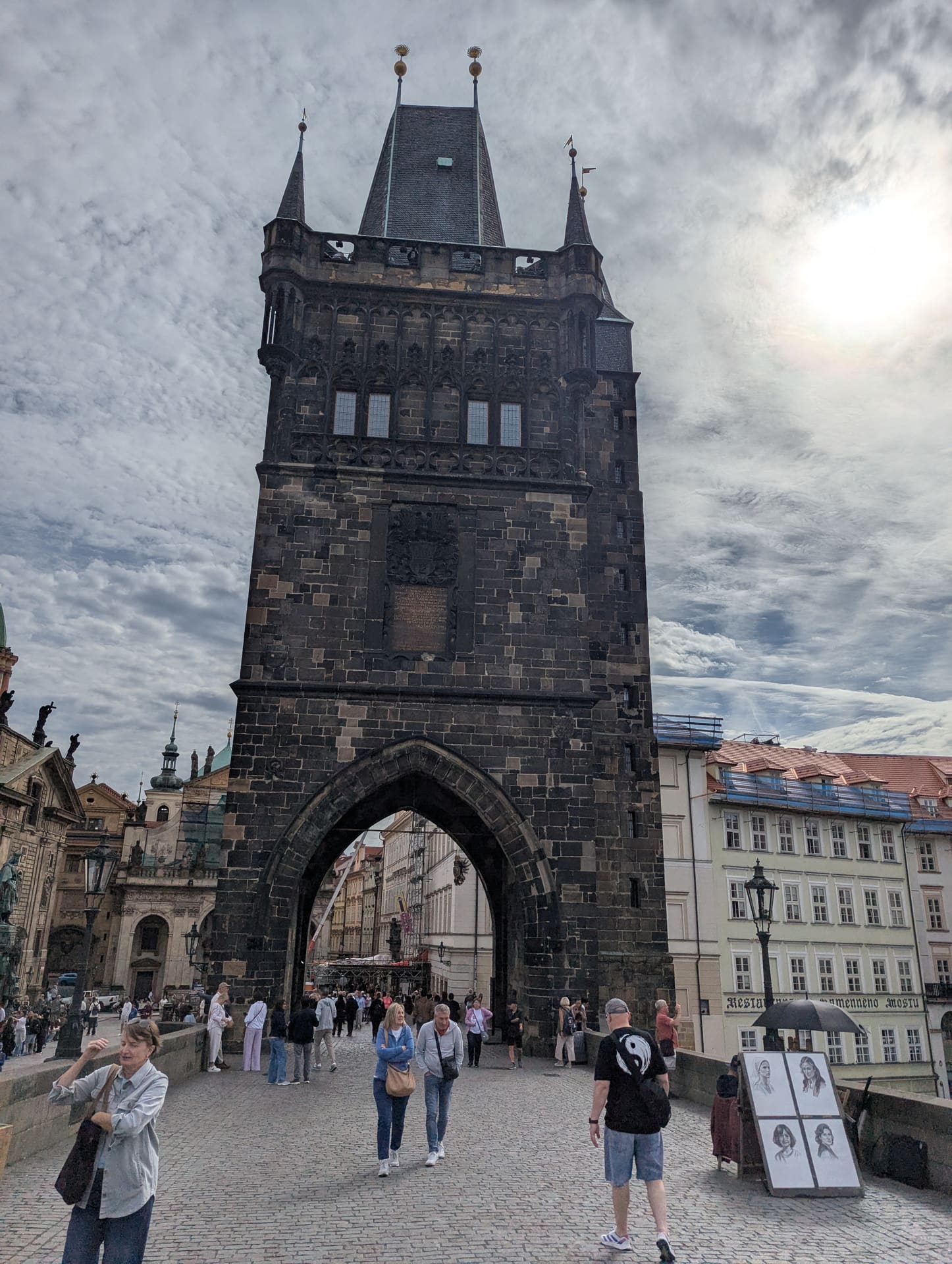
Charles Bridge, roughly 667 years old and still the city's busiest crossing.
From there, up to Prague Castle. There's plenty to do here — including walking Golden Lane, a narrow medieval street of tiny, colorful houses once home to the castle's goldsmiths (and, later, Franz Kafka, who wrote for a time in the house at No. 22). We skipped the long queue for it and just wandered the castle gardens instead, taking in the view over the city.
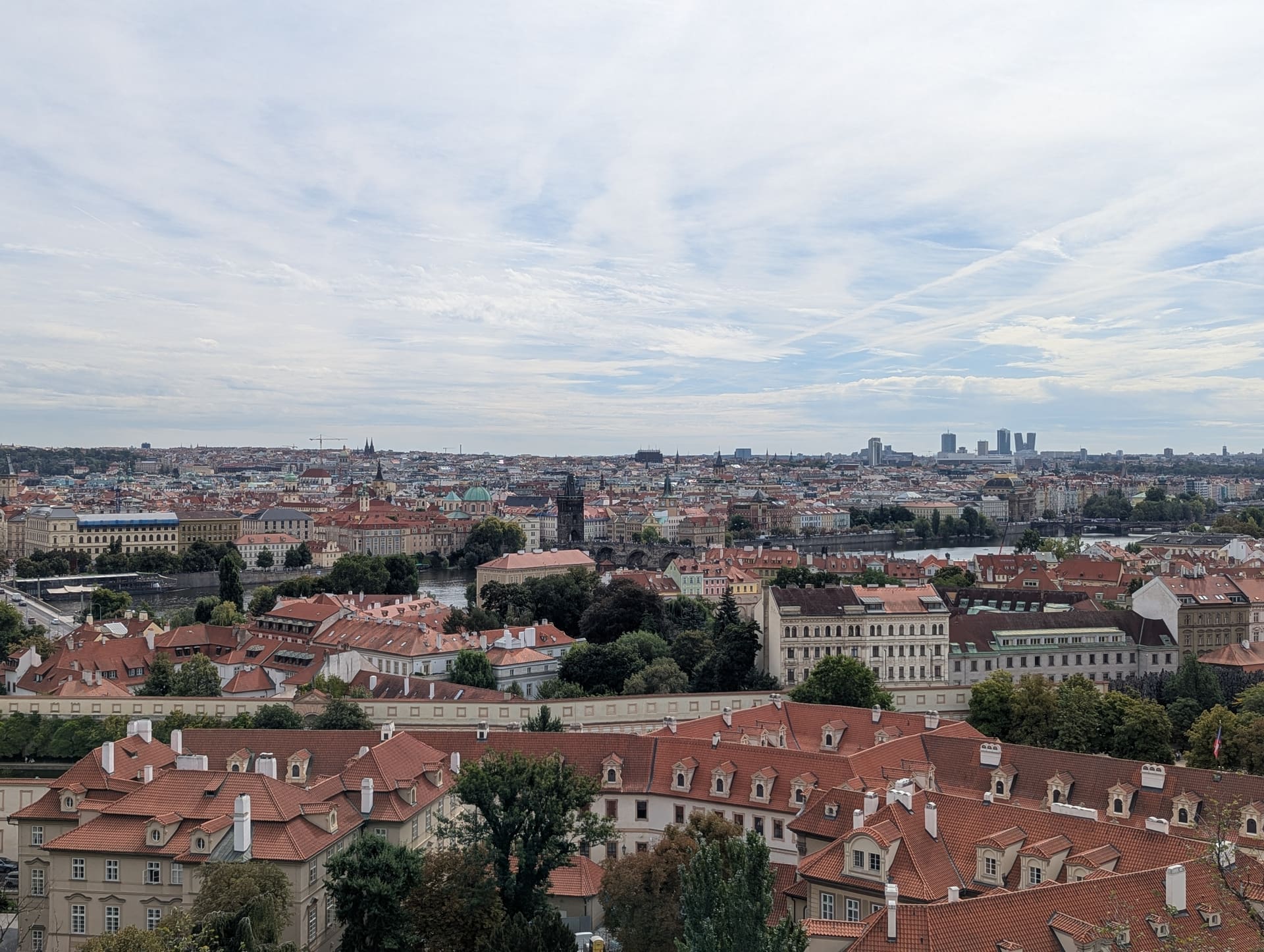
The whole city, red rooftops and all, from the castle gardens.
Back down to the main city for lunch, then a boat tour. There are three options at roughly €26 per person: a short sightseeing loop, a dinner cruise, and a longer one with live music. We took the Charles Bridge Museum & Little Venice tour — a 45-minute ride through the canals with an audio guide covering the old mills and waterways that gave the area its "Little Venice" nickname (it's charming, if a stretch of the comparison).
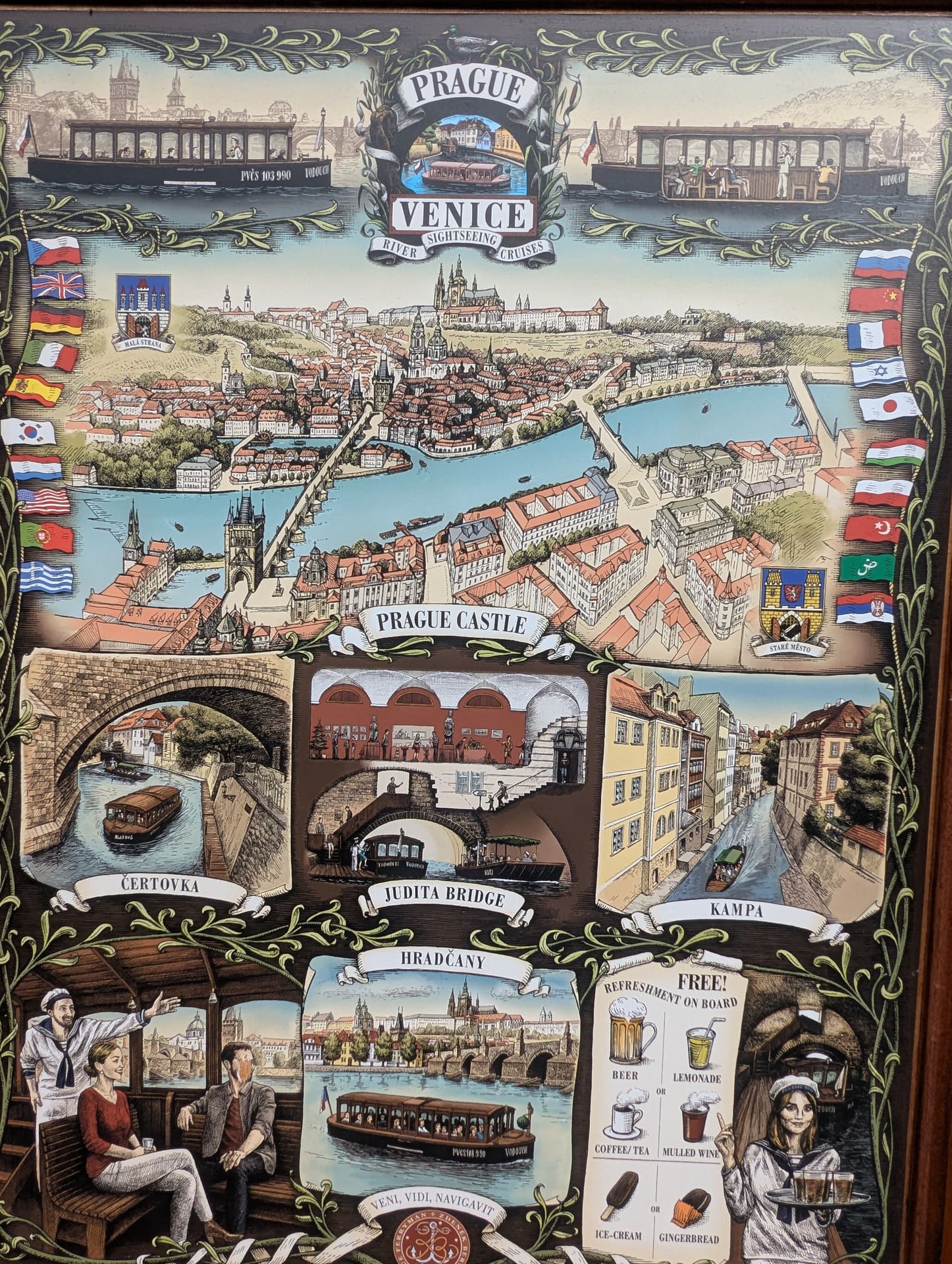
Prague's "Little Venice" — canals, old mills, and a very relaxed 45 minutes.
We closed the day back at Fly Vista — a genuinely massive indoor arcade spanning the 4th through 7th floors, with a rooftop bar on the 8th. The sky-view terrace was closed for a private event when we visited, but the staff were kind enough to hand us two free passes for a return visit. We still have them — if you're reading this and want them, they're yours. Go enjoy the view and report back.
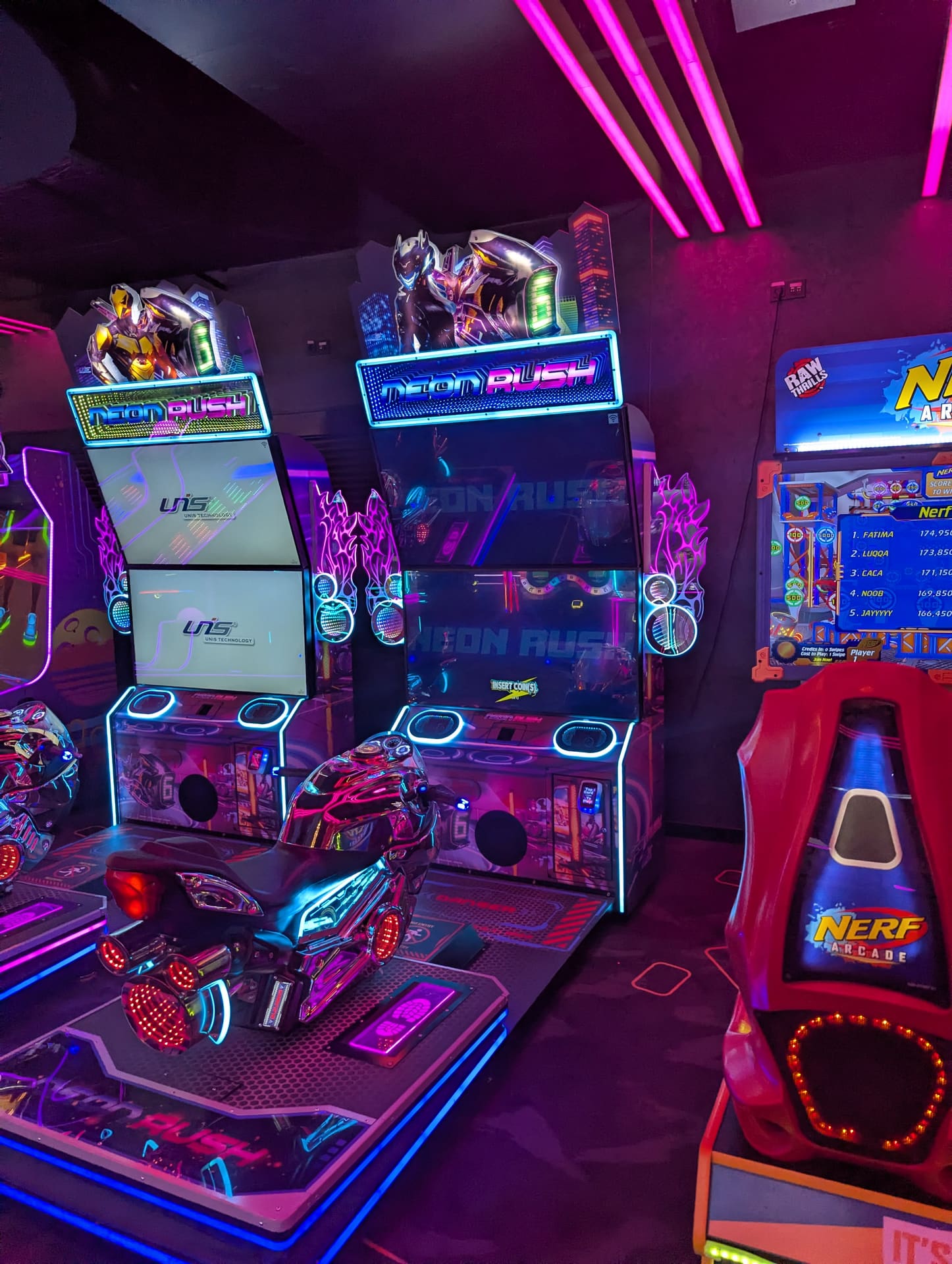
Four floors of arcade, one very good excuse to stay in from the heat.
Day two: heat, a planetarium that wasn't, and a very orange-toothed local
Day two hit 31°C — a proper reminder that September heat in Europe isn't what it used to be. We tried to visit the planetarium in the morning but it was fully booked, so we improvised and went to meet Prague's most laid-back local residents instead: a nutria family.
My wife fed them a snack, which they thoroughly approved of.
Fact: A nutria's front teeth are bright orange — not from a carrot-heavy diet (as I confidently guessed and was promptly corrected on), but because their enamel is naturally reinforced with iron.
With the heat setting in, we headed back to the hotel, made good use of the rooftop pool, and took a proper power nap. Later, we met up with old friends who happened to be in Prague at the same time — pure coincidence — for live music and a sunset drink before the long drive home the next morning.
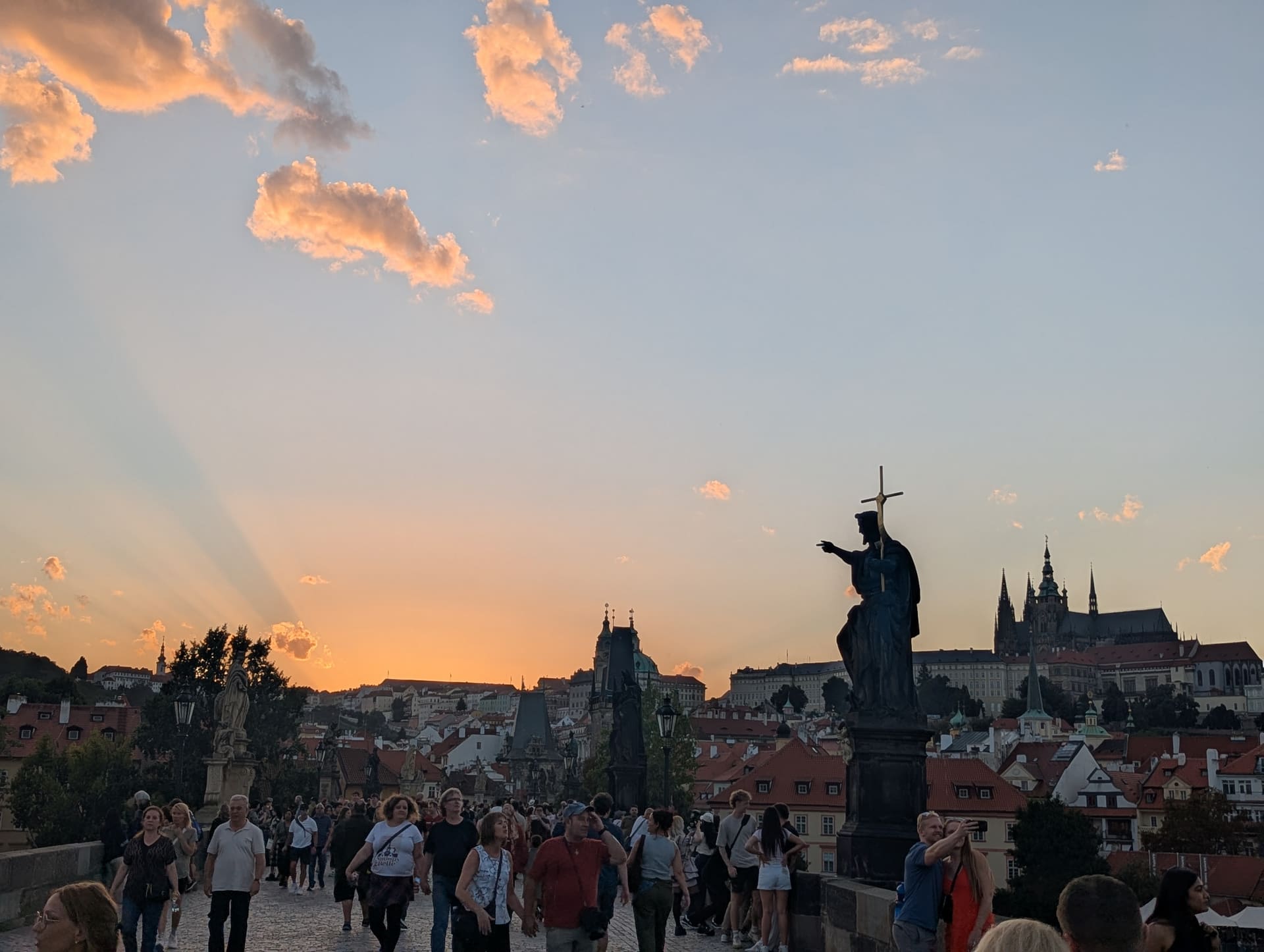
Even in a hot day the sunset on the bridge is beautiful
A few more from the trip
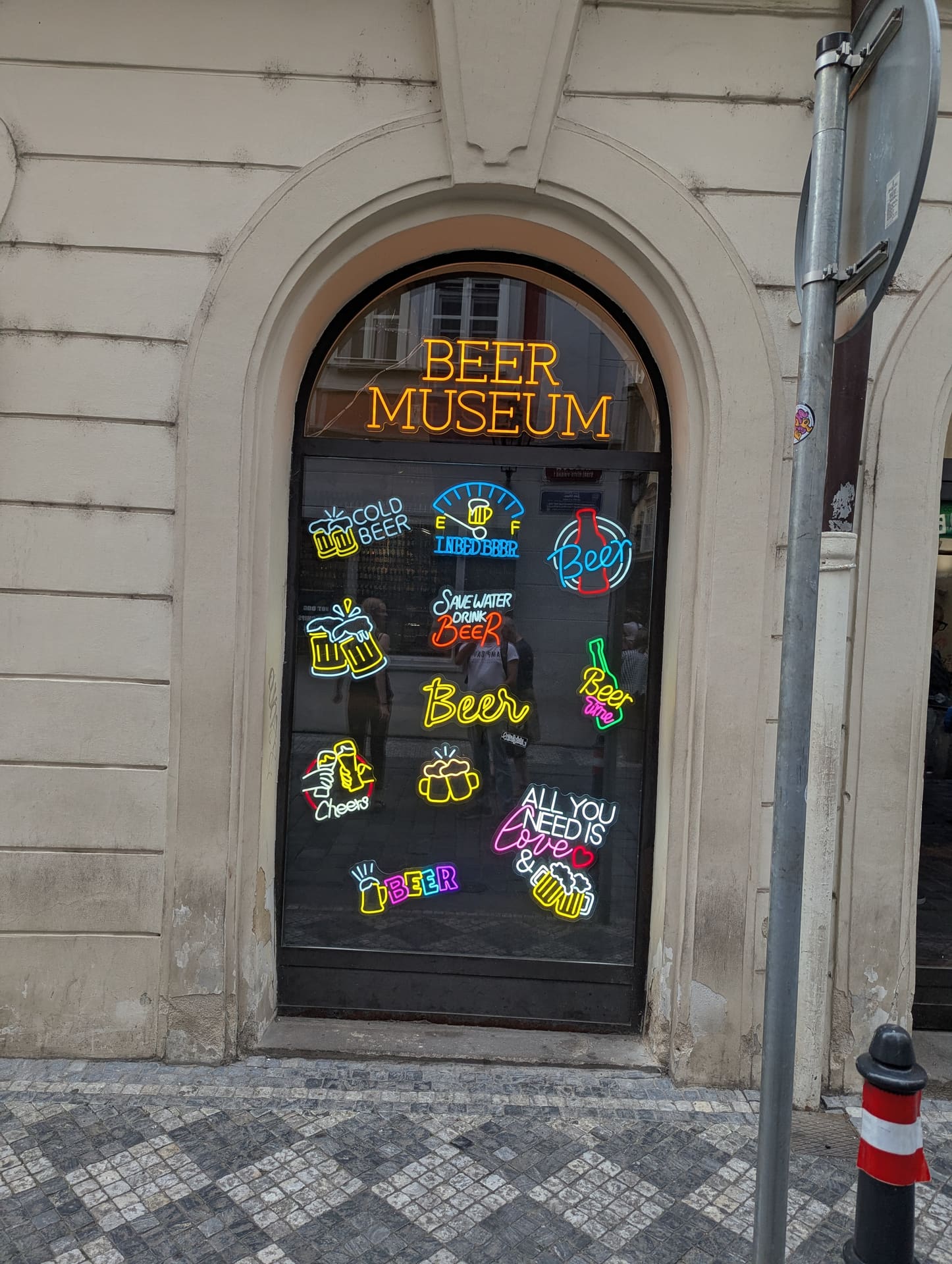 best visited when drunk
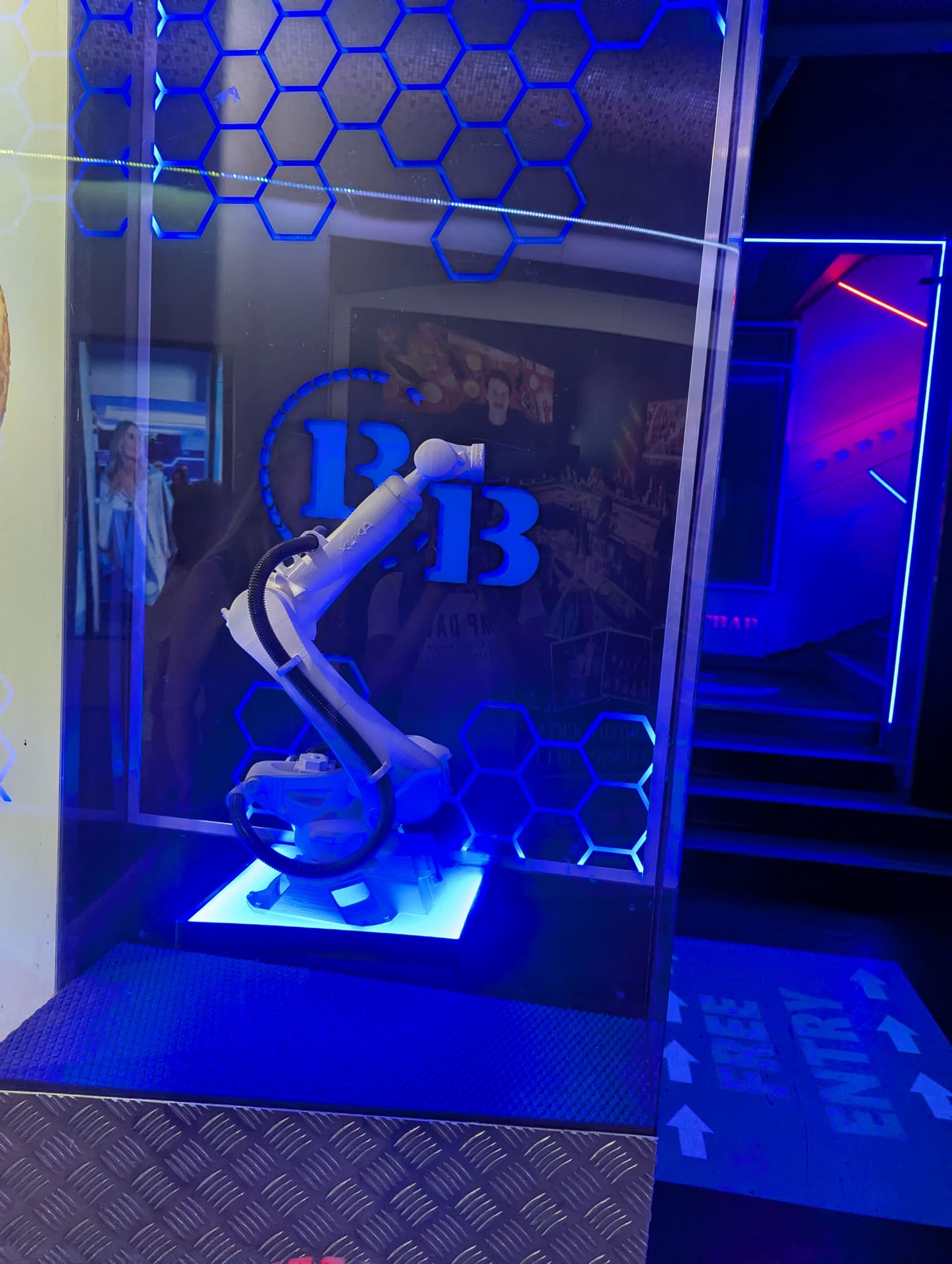 Terminator as a child
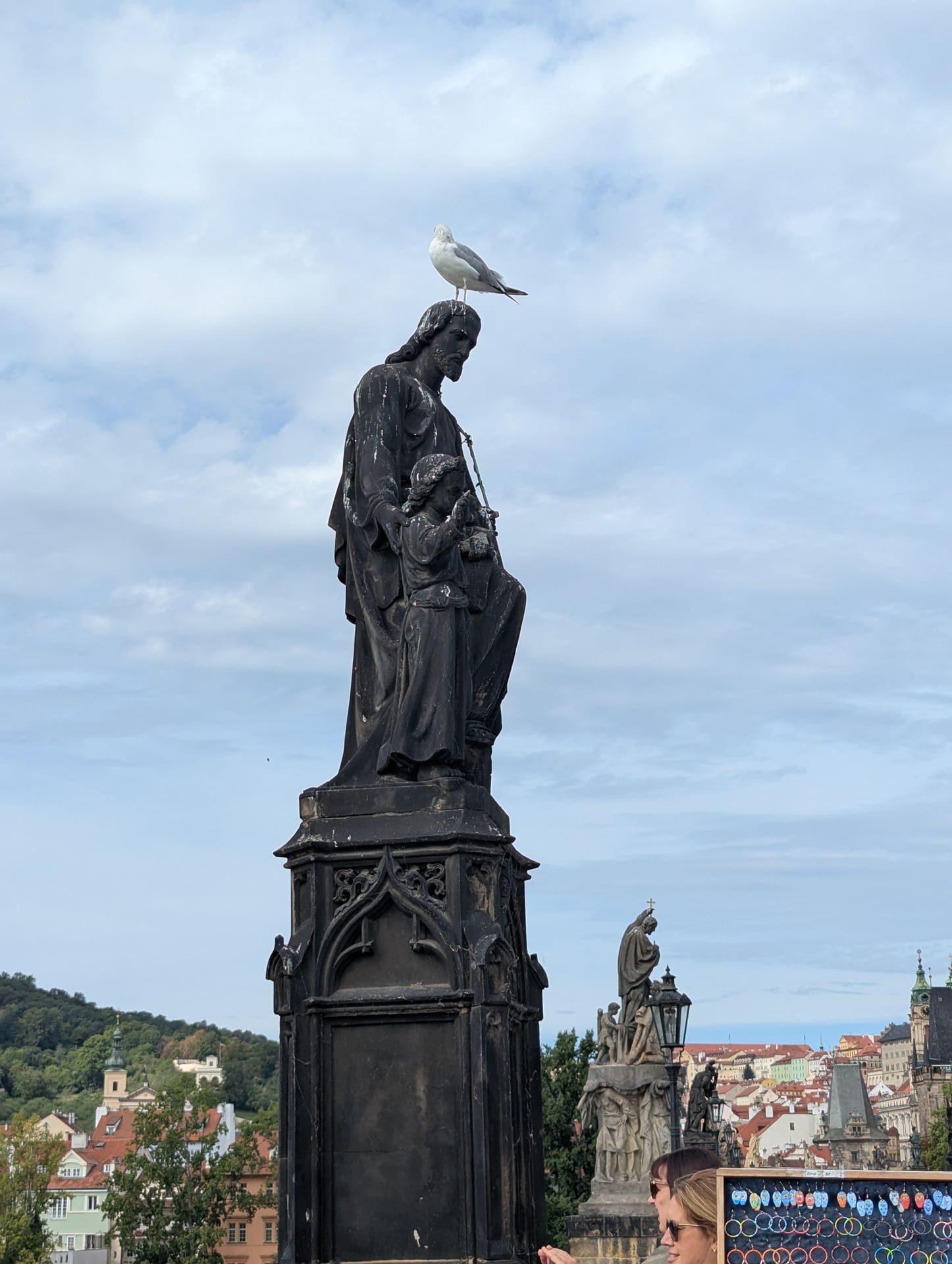 when you think you're having a bad day
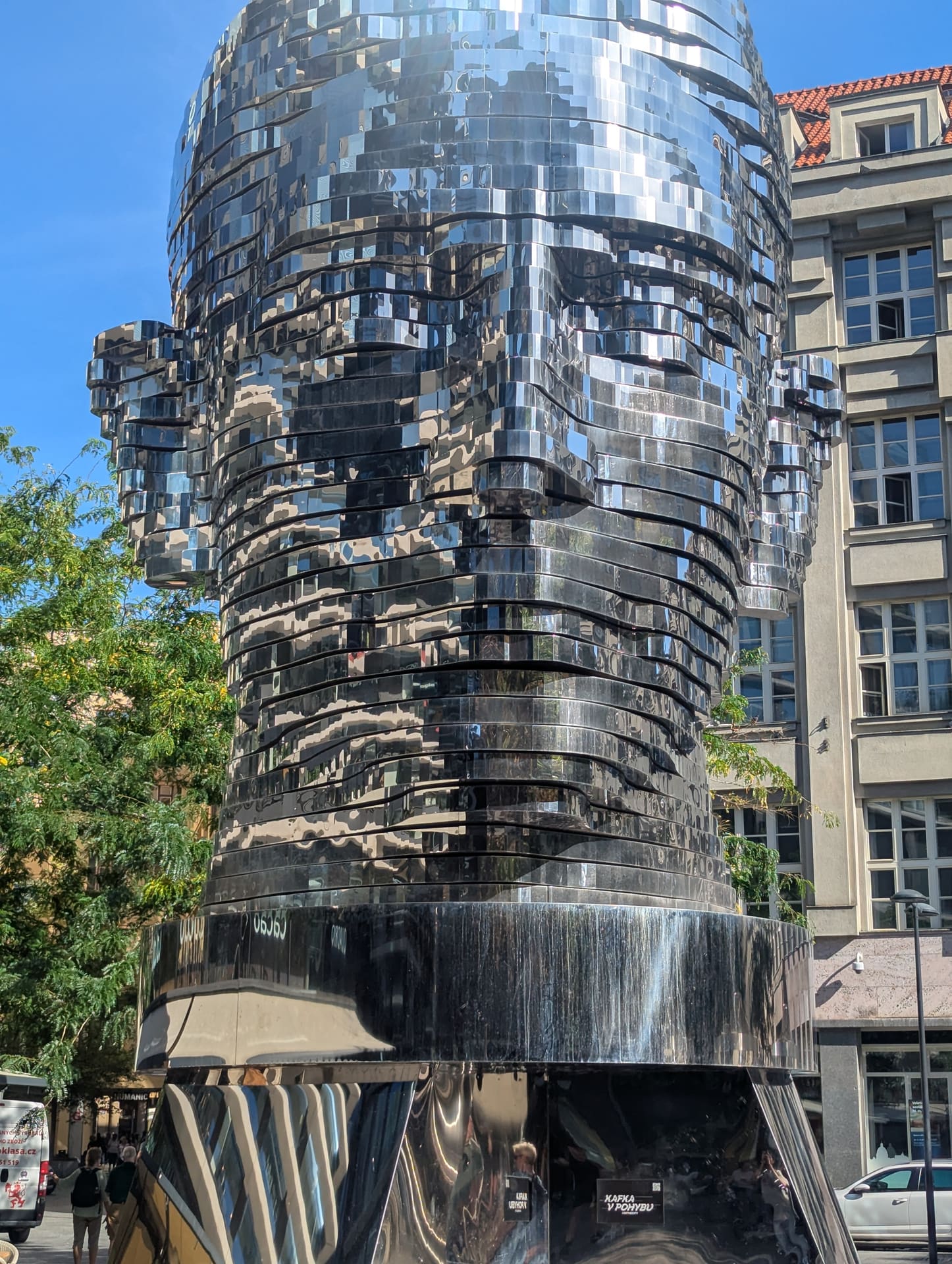 silver surfer
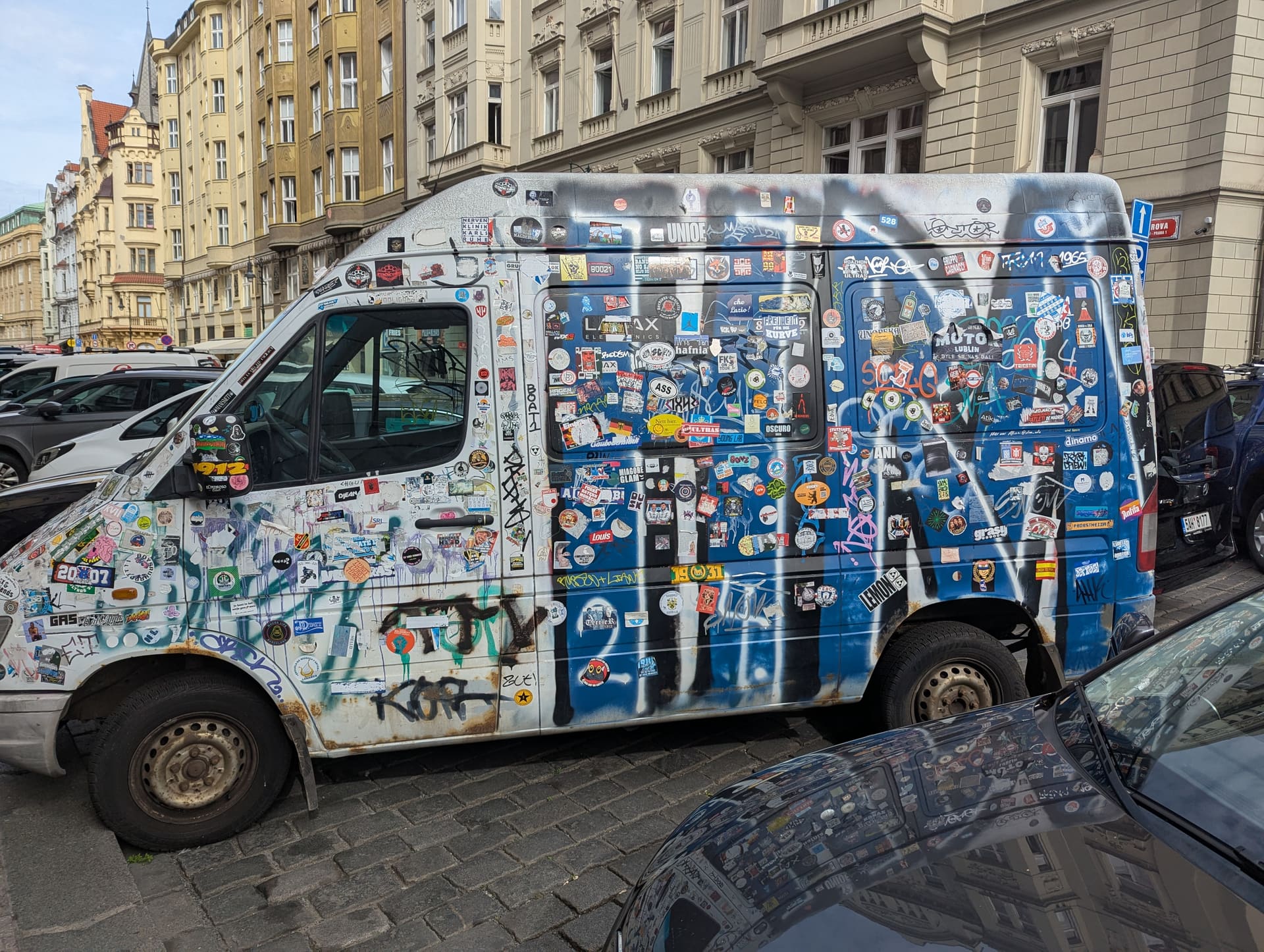 mystery machine
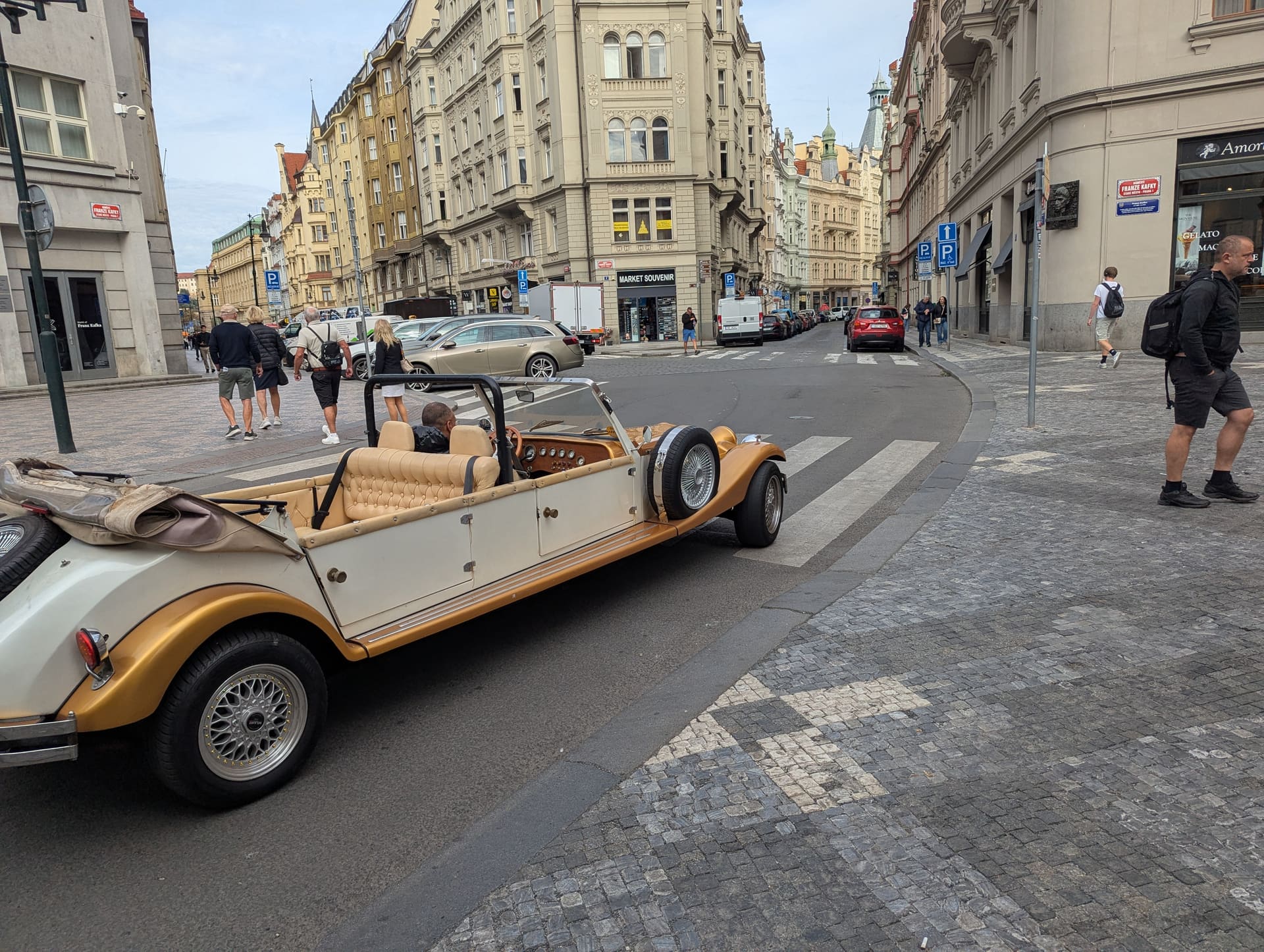 aura farming
Tips for your own trip
- Drive in, if you can. It gives you the freedom for pit stops — Plzeň alone is worth one. FlixBus also runs a roughly 4-hour route from Munich if you'd rather not drive.
- Ditch the car once you're in Prague. Public transport is fast, frequent, and cheap — a day ticket runs a little over €12 for two people, covers metro, tram, and bus.
- Two days is plenty. Unless you're planning something specific — café hopping, a proper bar crawl — the core sights fit comfortably into a single busy day, with a second for anything you skipped.
- Too many museums. Prague is rich in history, but in places that tips into feeling forced — the Franz Kafka head sculpture is a good example. Personally, it wasn't for me; there's a museum on nearly every corner, and after a while it stops feeling like history and starts feeling like a pattern.
- Plan around the heat. Some of the older trams have no air conditioning, and shade is scarce on the main walking routes. A hot day here is a genuinely hot day.
- Skip the long queues. Unless you're filming content for a living, most lines aren't worth the wait — there's usually a quieter way to see the same thing.
- Fill up before the border. Fuel is noticeably cheaper in Germany and Poland than in Czechia.
- Eating out is a bargain compared to Germany, and most of the same retail chains are here too — clothes run cheaper, though shoes tend to cost more.
- Do the currency math. Converting from CZK to euros isn't always intuitive — some prices line up close to what the exchange rate suggests, others turn out barely cheaper, or even more expensive, once you actually convert. When in doubt, calculate it rather than assume.
Enjoyed this one? Get the next post by email — no spam, unsubscribe anytime.
Subscribe →